
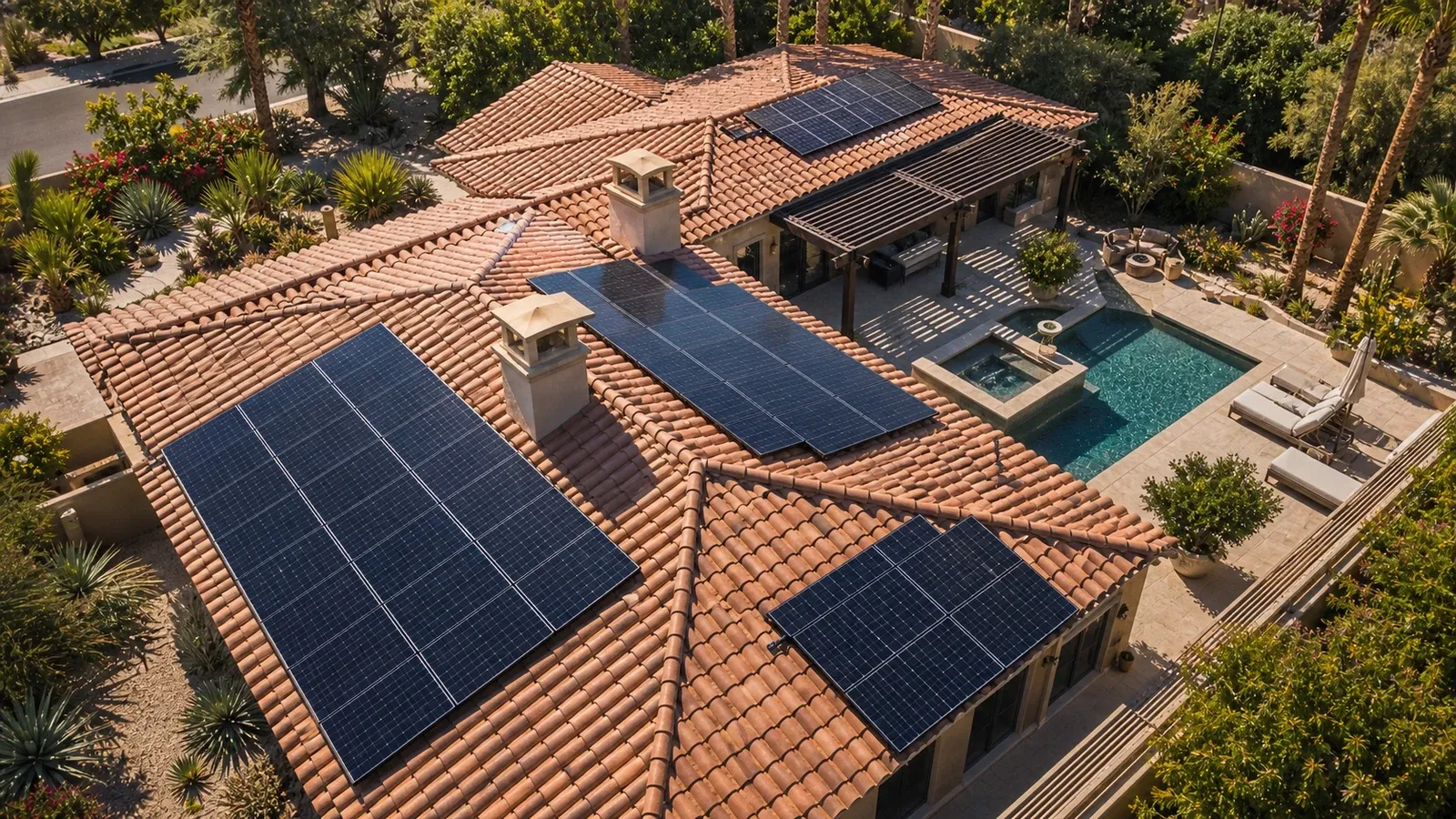
It’s the first question almost every solar owner asks before paying for a cleaning: is this actually going to lower my bill, or just make the panels look nicer?
For most Coachella Valley homes, the honest answer is yes: a cleaning is a production upgrade, not a cosmetic one. But the size of the savings depends on a few things, and there are cases where a cleaning genuinely won’t move your bill. This is the straight version of both.
The short answer, and why it works
Your solar panels lower your bill by making electricity you’d otherwise have to buy from the utility. Anything that reduces how much they produce, like a layer of dust, means you make less of your own power and pull more from the grid. That gap is exactly what shows up as a higher bill.
Cleaning removes that layer from the glass and may help the panels produce closer to their expected level. How that change appears on a bill depends on system condition, weather, household use, and the utility’s rate and solar-credit structure.
How much it helps comes down to one number, how much production you actually recover. And in the desert, that number is rarely small.
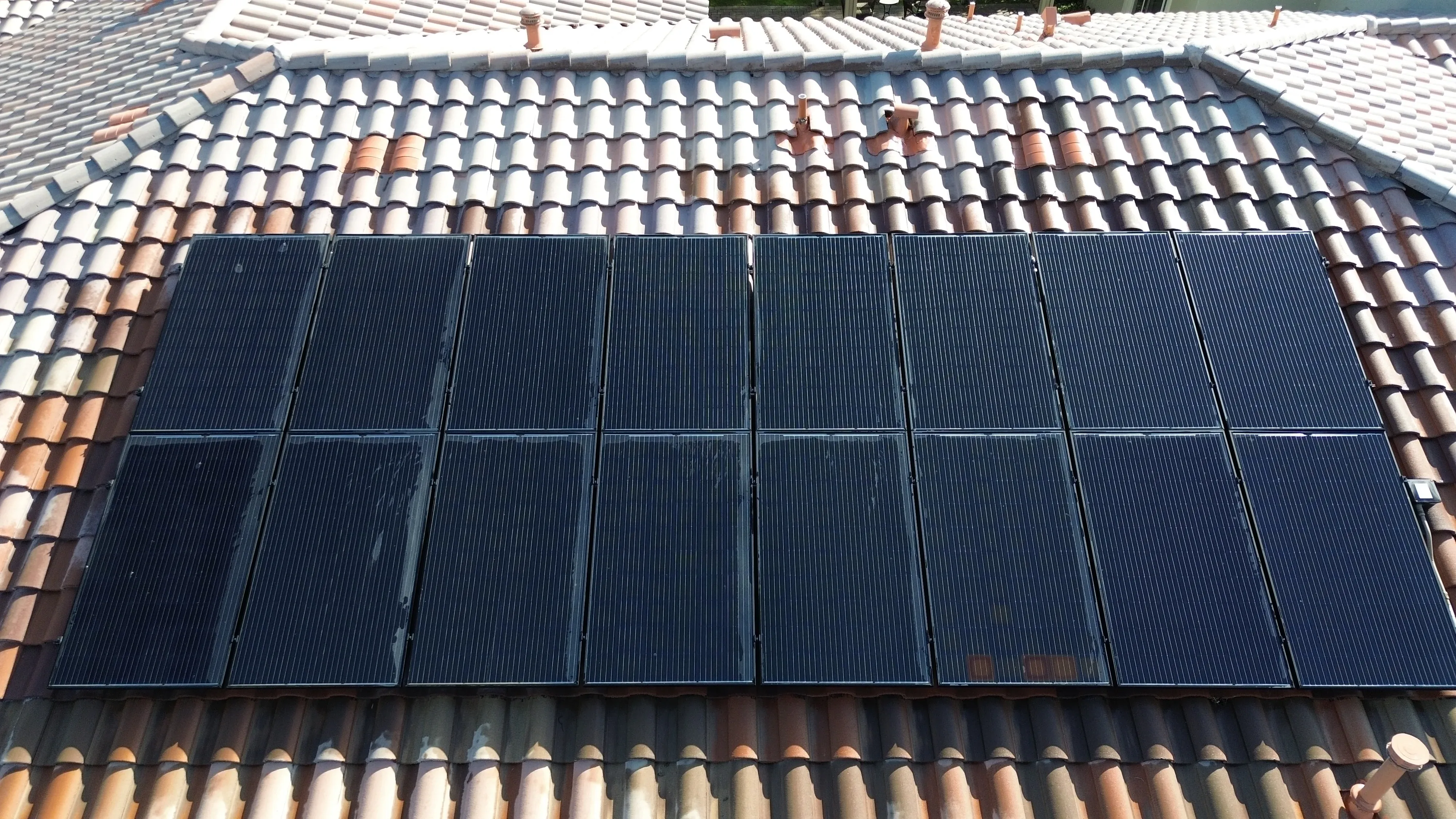
From the ground, desert soiling can look like normal haze. On the bill, that haze shows up as lost production.
How dirty panels raise your bill without you noticing
Soiling does not usually trigger an obvious warning. Panels continue working while production may gradually decline, and buildup can be difficult to judge from the ground.
That makes the effect easy to confuse with seasonal rates, air-conditioning use, cloud cover, or normal variation. Comparing monitoring data over similar weather periods is more useful than judging the need for cleaning from one bill alone.
How much you can expect to save
The financial effect depends on the number of panels, the amount and type of soiling, current system performance, and the applicable utility rate. Heavily fouled panels can lose meaningful production, but no single recovery percentage applies to every home. Use before-and-after monitoring under similar conditions to evaluate your own system.
Put real numbers on it:
| System | Annual production | Soiling loss | Utility rate | Annual loss to dust |
|---|---|---|---|---|
| 20-panel home | 10,000 kWh | 15% | $0.40/kWh | ~$600/yr |
| 40-panel home | 19,000 kWh | 15% | $0.40/kWh | ~$1,140/yr |
For that illustrative 20-panel home, two or three cleans a year might cost about $360 to $540. Whether the service offsets its cost depends on the actual production recovered and how the utility credits or bills solar energy. Treat the example as a way to compare costs, not a guaranteed return.
Why this is bigger in the desert than almost anywhere
In much of the country, occasional rain rinses panels often enough that cleaning is mostly cosmetic. The Coachella Valley is the opposite case:
- Only 3 to 4 inches of rain a year, which is often not enough to rinse accumulated dust from the glass; light rain can also leave visible spots.
- Year-round dust through the San Gorgonio Pass, plus monsoon storms, agricultural particulate, and seasonal pollen.
That combination is why desert arrays soil faster and lose more than the national average, and why cleaning here recovers real money instead of just sprucing up the look.

The Coachella Valley gives solar everything it needs except rain. The sun is free; keeping the glass clear is the part you have to do on purpose.
When cleaning won’t noticeably lower your bill
This is the part most cleaners won’t tell you, and it’s exactly why you should trust the ones who do. A cleaning won’t meaningfully cut your bill if:
- Your panels are already clean or were recently rinsed by a good rain.
- The production drop isn’t from dust. Shading from a grown tree, a wiring or inverter fault, or normal panel-age degradation will not be fixed by washing the glass.
- There’s barely any soiling to remove, common in the weeks right after a clean.
A straight answer beats a sales pitch here. That’s why we map and inspect the array first, so if a cleaning isn’t going to recover much, you hear that before you pay, not after.
What to expect after a clean
When surface soiling is limiting production, monitoring may show a change soon after cleaning. A utility bill can take a full cycle to reflect the difference, and weather, energy use, rates, equipment condition, and solar credits can make the result less obvious.
We can provide before-and-after photos to document the visible condition of the array. Our cleaning process uses deionized water and controlled aerial passes, so the service does not require a technician to walk on the roof or use abrasive tools on the glass.
Curious what your panels are actually costing you while they’re dirty? Send us your panel count and address and we’ll estimate it for you, no charge, before any cleaning.