Cell-level hotspots
Localized heat patterns that stand apart from neighboring cells.

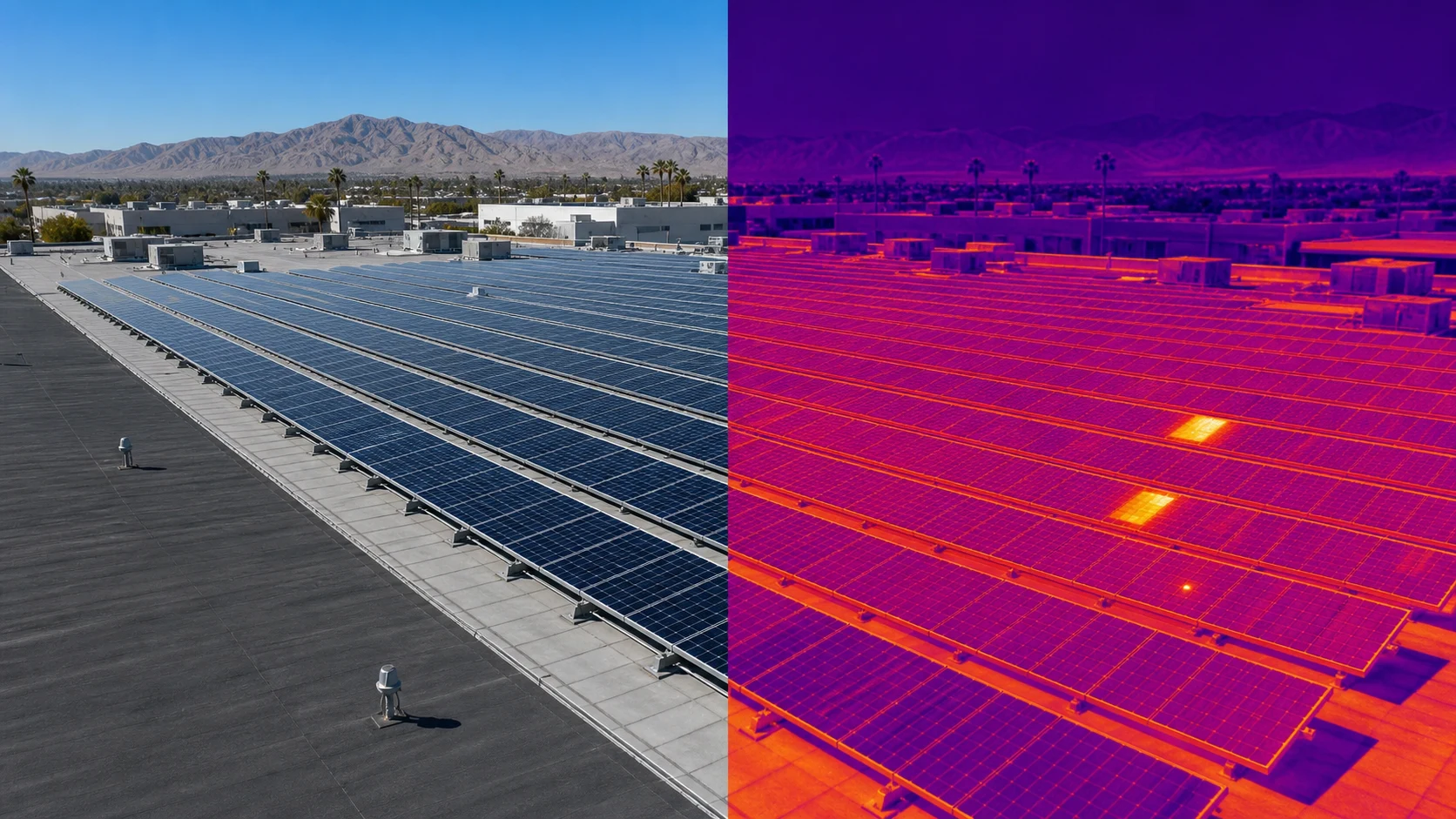
Aerial PV diagnostics
Drone-based thermal imaging maps abnormal heat patterns across commercial rooftops, carports, and large solar arrays.
Inspection, not guesswork
Large arrays can hide small problems in plain sight. Aerial thermography surveys the system under operating conditions and highlights temperature differences that deserve closer attention.
Thermal patterns locate potential anomalies; visual and electrical testing may still be required to confirm the cause and select a repair.
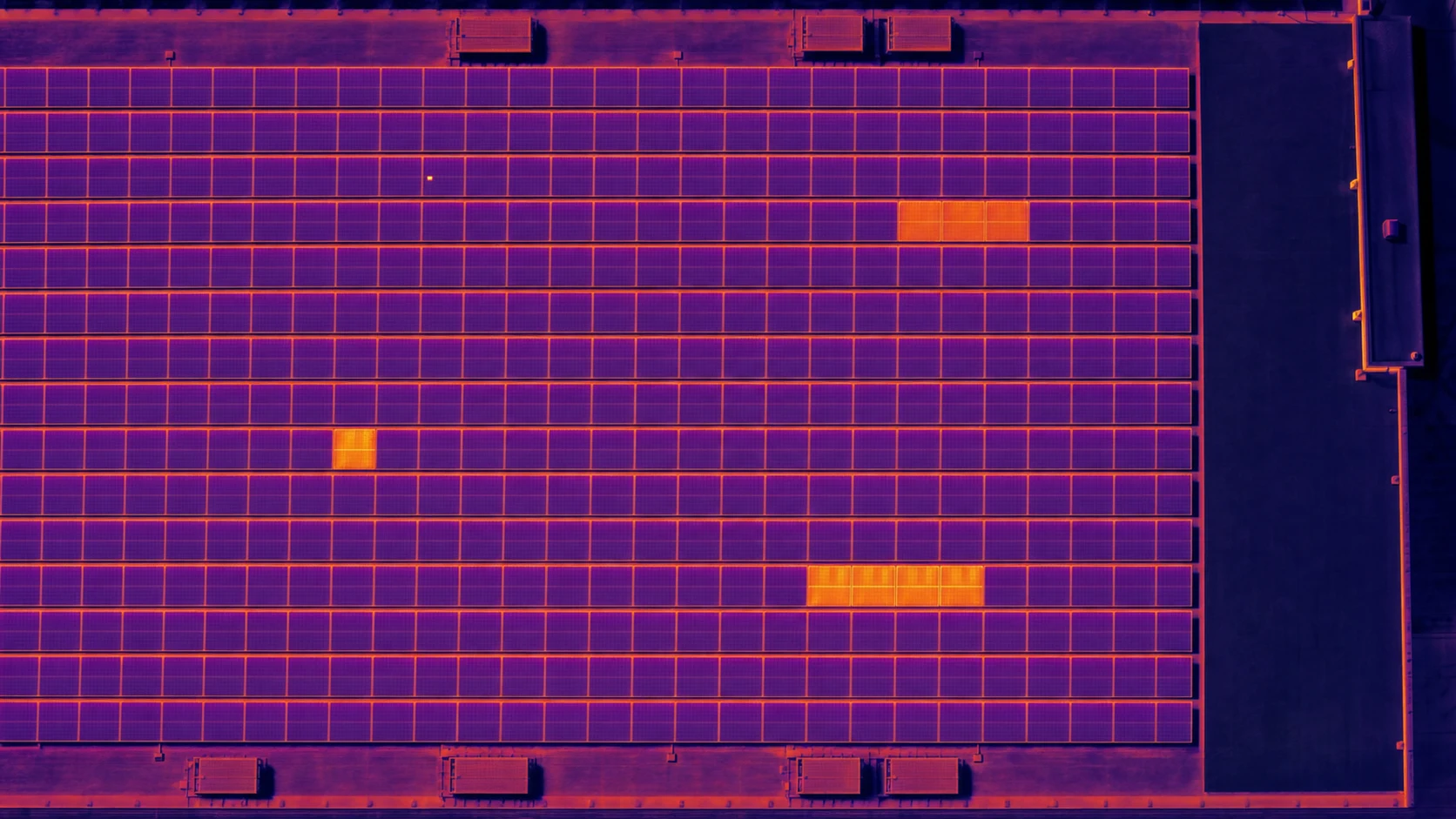 Illustrative thermal view
 What the survey can reveal
Localized heat patterns that stand apart from neighboring cells.
Warmer grouped areas that warrant targeted technical review.
Panels operating at a different apparent temperature than the surrounding array.
Repeatable patterns across connected modules that help narrow follow-up work.
The inspection flight
Confirm the array layout, flight area, operating state, and usable weather window.
Collect matched visible and thermal imagery across a repeatable flight path.
Review temperature patterns and map observations back to the array.
Deliver prioritized findings with visual evidence and recommended next steps.
From capture to context
Every array and maintenance team is different. The final scope can be tailored around the property, inspection objective, and level of documentation the project calls for.
Visible and thermal imagery collected across the agreed inspection area.
A focused review of apparent temperature differences and areas that warrant attention.
Observations organized so site teams can connect the imagery back to the physical array.
A project-specific inspection package prepared for facilities, asset, or technical teams.
The handoff
Depending on project scope, the handoff can include a clear visual record designed for facilities, asset management, and technical follow-up.
Thermal inspection FAQ
Thermal imaging can locate abnormal temperature patterns at the cell, module, substring, and array level. Those patterns help prioritize areas for closer visual or electrical testing; they do not automatically prove the underlying cause.
No. Useful outdoor thermography is normally captured while the system is operating under adequate sunlight. We confirm weather, irradiance, access, and operating conditions before the flight.
The deliverable can include a site overview, mapped finding locations, paired visible and thermal imagery, observation notes, inspection conditions, and a prioritized recommendation for follow-up.
No. Thermography is a fast, non-contact way to locate heat anomalies across an array. An electrician or solar technician may need to perform electrical testing to confirm a diagnosis and determine the correct repair.
Yes, when site conditions and project scope allow. We can coordinate an inspection with a cleaning visit so the array receives both surface maintenance and documented aerial observations.
DronePower1 can scope inspections for commercial rooftops, solar parking canopies, carports, institutional facilities, and ground-mounted solar arrays across our service region.
Get a Quote
Tell us about your property and we'll send a no-obligation quote. On commercial work, show us your last bill and we'll beat it by 10%.
No obligation. Send your details and a real person gets back to you, typically the same business day.